Critical funding restored for medical research
Veteran-focused Peer Reviewed Medical Research Program funding returned to 2024 funding level after 50% cut in 2025
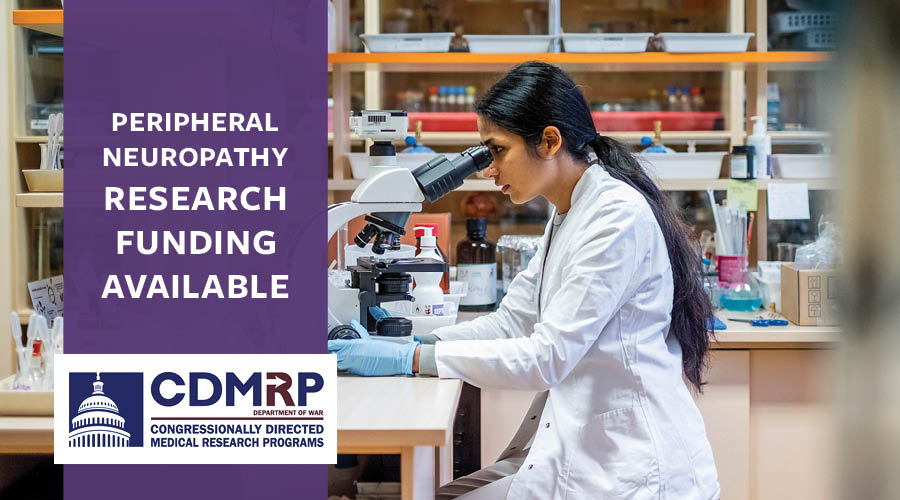
After a huge cut in 2025, research funding for the Department of Defense’s Peer Reviewed Medical Research Program (PRMRP) is finally back to its earlier level: $370 million. This is great news for people living with peripheral neuropathy (PN), because each year we work hard to make sure PN is one of the topics that can receive this important research money. The more money in the program, the more chances researchers have to discover new treatments, and someday, cures.
While the larger medical research system inside the Department of Defense wasn’t fully restored, it did see a major improvement. The overall Congressionally Directed Medical Research Program (CDMRP) rose from $650 million in 2025 to $1.27 billion in 2026. This means more support for many health areas that affect service members, veterans, and families across the country.
Why this funding matters
This funding isn’t just numbers on a page. It affects real people, every single day.
Many veterans and active-duty service members struggle with long-term health conditions. PN is one of them. It causes pain, weakness, numbness, and loss of independence. There are no cures yet, but research is how we get there.
PRMRP dollars support studies that help scientists:
- Discover why diseases happen
- Create better tests
- Develop new treatments
- Improve the lives of people who are living with chronic conditions right now
Because PRMRP is a competitive program, only the strongest and most promising scientific ideas are funded. Congress also requires this money to be spent exactly on the topics listed—including peripheral neuropathy—so the funds directly support conditions that affect military members and the general public.
What restoring this money means for the future
This return to strong funding is more than a one-year win. It helps build a healthier future in several ways:
1. More scientific progress
When research programs are fully funded, scientists can continue long-term projects. Many breakthroughs happen only after years of steady work. Cuts slow progress, but restored funding gets everything moving again.
2. New ideas and innovation
Researchers can try new approaches, test new tools, and partner with others. Innovation needs space to grow, and funding provides that space.
3. Support for veterans and active-duty service members
Many conditions studied in PRMRP—including PN—are linked to military service. Funding research means we honor and support those who have served.
4. A stronger American economy
Medical research doesn’t just help patients, it creates jobs. Scientists, lab workers, engineers, doctors, and many others are part of this effort. When research funding increases, so does economic growth in communities across the country.
Why research needs to keep growing
Even with the restored funding, the need is still great. PN and many other conditions remain under-researched. Millions of Americans live with chronic nerve pain and other devastating symptoms from neuropathy, and veterans are at higher risk. We need ongoing, reliable funding to continue the progress that has already begun.
When research dollars fall, discoveries slow down. But when Congress invests at strong levels, like it did this year, we protect the future of medical science and give hope to families everywhere.
To learn more about why research dollars matter so much, and how they help protect both public health and the American economy, visit: https://www.foundationforpn.org/advocating-for-pn-research-the-critical-need-for-research-dollars/
What to support our advocacy and research funding efforts?
Donate now. https://www.foundationforpn.org/donate/