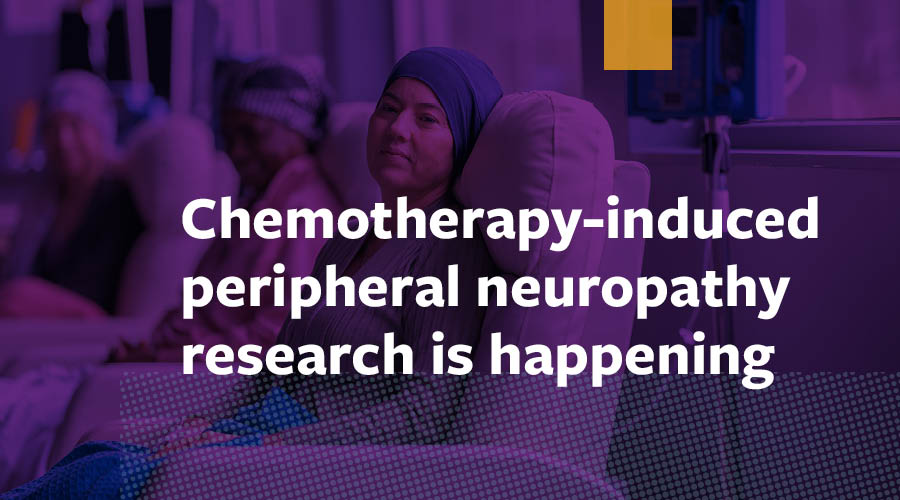
Chemotherapy induced peripheral neuropathy research is on the rise
Chemotherapy induced peripheral neuropathy (CIPN) can impact up to 70% of chemo patients. The effects can linger long after chemotherapy has ended. Patients can be left with issues in their hands or feet ranging from pain and tingling to muscle weakness.
Treating CIPN is really hard
Scientists don’t fully understand what causes CIPN. Studies have shown that chemotherapy drugs can harm nerves, disrupt nerve signaling and cause inflammation throughout the body. Chemo causing issues in so many ways makes it hard to identify a clear treatment or prevention path.
Doctors have trouble measuring CIPN
Doctors rely on patients to describe how they feel, like if they have tingling or weakness. But everyone feels things differently, so it’s hard to know how bad it really is. People have different pain tolerances. There are some tests and rating systems, but they don’t always work well or give clear answers. Every person’s body is different, so symptoms can look different from person to person, even when people take the same chemo drug.
Potential drug interactions make things more complicated
CIPN isn’t seen as life-threatening, it’s seen as a quality-of-life issue. This means that companies don’t want to risk reducing the effectiveness of chemo by adding other drugs to the mix. There’s concern that a CIPN drug could mess with cancer treatment or even help cancer grow. Because of these risks, many companies choose not to work on CIPN treatments. Plus, the FDA released new draft guidelines for CIPN preventative drug development in early 2025 which may cause some companies to shy away from CIPN research. https://www.fda.gov/regulatory-information/search-fda-guidance-documents/prevention-and-treatment-chemotherapy-induced-peripheral-neuropathy-developing-drug-and-biological
What’s happening in CIPN research
Despite the challenges, there ARE people doing research in this space! As the third largest cause of peripheral neuropathy, we’re counting on more research in this space to reduce, or eliminate CIPN from the cancer patient journey.
That’s why we’re putting our money where our mouth is. Our 2024 research scholarship recipient, Francesco E. Michelassi, MD, PhD, is studying CIPN. His research focuses on studying if increasing mitochondria, the power factories of cells, can prevent this neuropathy. He’s also interested in which part of the cell is first damaged by chemotherapy drugs, and how that new information can be used to create treatments.
Other research happening in the space
This is a short list of some of the research happening around CIPN. This is not all inclusive, but just a few highlights to check out. New studies are happening all the time. This list shares a small slice of the work being done to help counter or prevent this debilitating side effect of chemotherapy.
- A few novel therapies are advancing in development. One of them, Asahi’s ART123, entered phase 3 trials in Japan earlier this year to evaluate whether it can prevent CIPN
- Assessing the efficacy and safety of pentoxifylline in preventing chemotherapy-induced peripheral neuropathy and mucositis in breast cancer patients
- Plant Food-Derived Antioxidant Nutrients in Neuroprotection Against Chemotherapy-Induced Neurotoxicity: From Molecular Mechanisms to Clinical Applications
- Surgical gloves ‘favourable’ as peripheral neuropathy preventive strategy for use of paclitaxel